
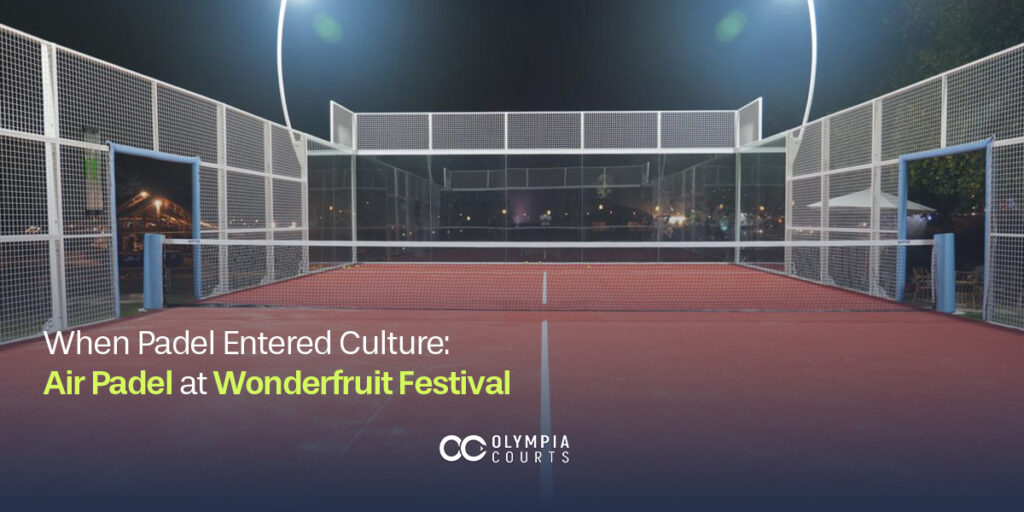
How Olympia Courts Is Redefining Padel in Asia—With Pad Thai Padel Bringing the Sport Into Culture
Air Padel made its festival debut at Wonderfruit Festival through Pad Thai Padel in Thailand, who introduced the sport into a cultural environment and provided the platform for Olympia Courts to demonstrate what adaptable padel engineering can achieve.
Padel didn’t arrive quietly. It appeared in the heart of one of Asia’s most influential lifestyle festivals—surrounded by music, art, nature, and thousands of people who had never held a racket before. No traditional sports venue. No members-only environment. Just padel, placed exactly where people already were.
That moment represented more than a display. It signaled a shift in how the sport can be introduced and understood in Asia—Pad Thai Padel bringing the cultural opportunity, and Olympia Courts enabling it through engineering and installation that made the activation possible.
Wonderfruit blends creativity, sustainability, movement, and community into one immersive experience. Bringing padel into that space was intentional. Instead of asking people to seek out a court inside a sports complex, the sport was placed inside a cultural playground where curiosity thrives. Festival-goers stopped, watched, asked questions, and many tried padel for the first time. The sport didn’t need much explaining. It spoke for itself.
What made this possible was Air Padel’s adaptability. Unlike traditional courts, it requires no permanent foundation, heavy construction, or long installation periods. It can sit on uneven ground, rooftops, green spaces, or public areas—making it ideal for festivals, pop-ups, resorts, or temporary activations. At Wonderfruit, this allowed padel to exist in harmony with the environment, respecting the festival’s sustainability-led design rather than disrupting it.
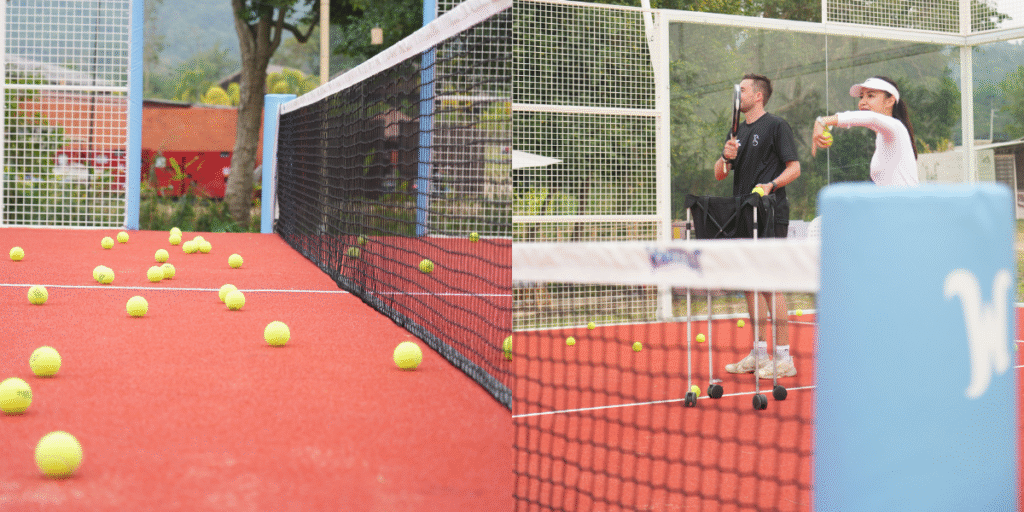
This installation marked a first-of-its-kind moment for padel in Asia. The sport has been expanding through clubs and academies, but its future relies just as much on visibility and accessibility. Wonderfruit showed that padel can step outside its traditional boundaries and still maintain real safety, quality, and playability. Many visitors were not club members or athletes—they were creatives, families, wellness audiences, and travelers discovering something new in a relaxed, social, and pressure-free atmosphere. That kind of encounter is what creates long-term interest.
The success of this activation sends a clear message: padel does not need to wait for permanent facilities to grow. With the right solution, it can appear in new spaces, reach new audiences quickly, and generate demand before major club developments even begin. This matters in Asia, where space, approvals, and timelines often slow progress. Air Padel offers a way for communities to experience the sport now, without sacrificing standards.
For Olympia Courts, Air Padel reflects a philosophy rather than a product—rethink where padel belongs, adapt world-class engineering to local realities, and introduce the sport in ways that feel natural and inclusive. From permanent clubs to rooftops, resorts, festivals, and public spaces, the approach remains the same: make padel visible, flexible, and accessible without compromising performance.
Air Padel at Wonderfruit wasn’t just a festival feature. It was a preview of how padel can grow in Asia: culturally, socially, and in the places where people already gather.
To learn more about Air Padel and how Olympia Courts can bring padel to virtually any space, visit olympiacourts.com.