
Permanent vs. Portable Padel Courts: Which Is Right for Your Project?
As padel continues to expand into new markets, the demand for flexible and professionally engineered court installations is growing. From dedicated padel clubs and luxury resorts to exhibitions, sporting events, and unconventional venues, developers and investors have more options than ever when planning a padel facility.
One of the first decisions to make is whether to install a permanent or portable padel court.
While both options can deliver a professional playing experience, they are designed to address different project requirements. Permanent courts are generally suited to long-term facilities where the infrastructure is built around the sport, while portable courts offer greater flexibility for locations where traditional construction may be impractical or where future relocation is important.
Understanding the differences between these two solutions can help investors, property developers, and venue operators make a more informed decision.
1. What Is a Permanent Padel Court?
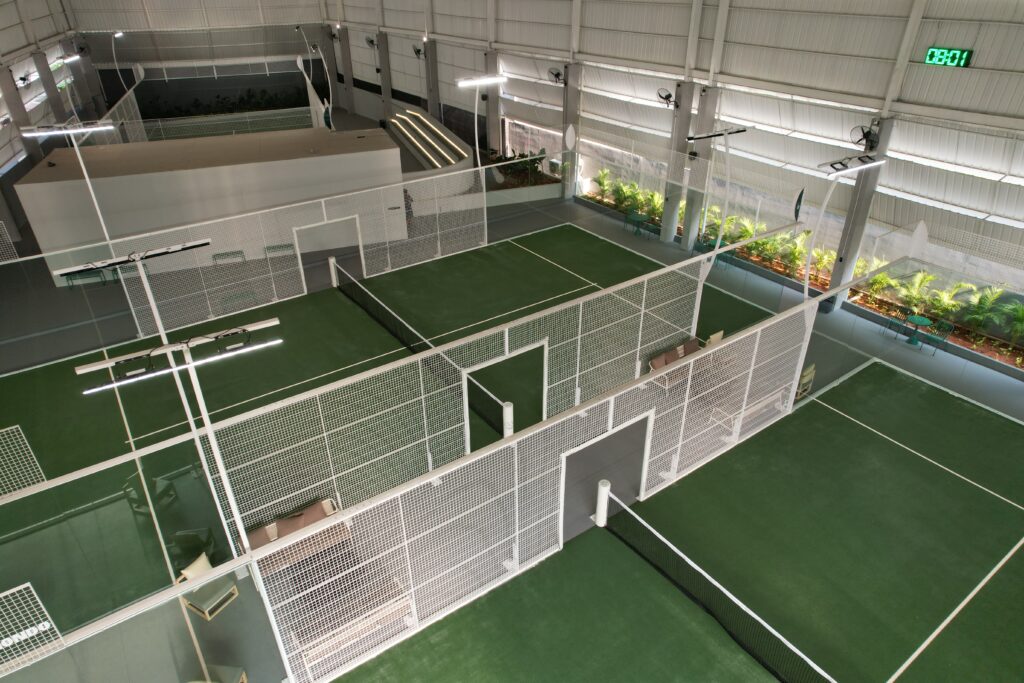
A permanent padel court is designed to remain at a specific location as part of a long-term sports or recreational facility. It is typically installed on a purpose-prepared foundation and integrated into the surrounding infrastructure.
This type of installation is commonly found in commercial padel clubs, sports complexes, hotels, residential developments, and educational institutions.
Because the court is intended for continuous use, its construction involves careful consideration of the site conditions, foundation requirements, drainage, structural stability, and environmental exposure.
A permanent installation may also be incorporated into a larger development plan, including multiple courts, spectator areas, changing rooms, reception facilities, and other amenities.
Key Advantages of Permanent Courts
Long-Term Infrastructure
Permanent courts are designed for facilities with an established location and a long-term operating plan. Their foundations and surrounding infrastructure can be developed specifically to support continuous use.
Integration With Existing Facilities
A permanent court can become part of a wider sports or hospitality development. This allows owners to create a complete padel destination rather than simply installing an individual playing area.
Greater Design Integration
The court can be planned alongside architectural elements, landscaping, lighting systems, access routes, and spectator facilities to create a consistent visual identity.
Suitable for Dedicated Padel Clubs
For operators planning daily bookings, coaching programs, leagues, and tournaments, permanent courts provide a practical foundation for establishing a dedicated sports facility.
2. What Is a Portable Padel Court?
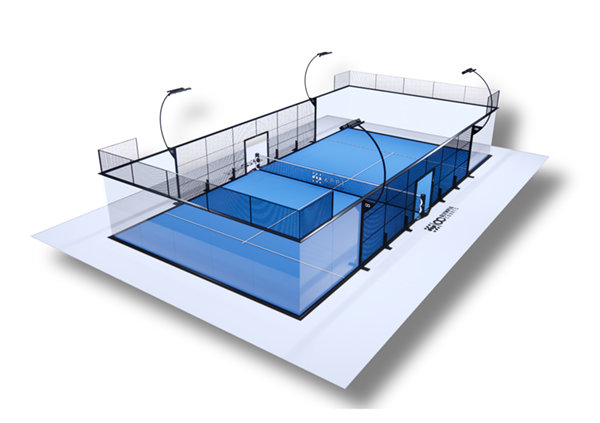
A portable padel court is an engineered court system designed to be assembled, dismantled, transported, and potentially reinstalled at another location.
Unlike conventional installations that depend on permanent foundations, portable solutions can use modular structural platforms that provide a stable and level base for the court.
This makes them particularly useful for temporary venues, exhibitions, sporting events, rooftops, leased properties, and locations where extensive ground preparation is difficult.
However, portable does not mean that the court compromises on professional playing requirements. The playing enclosure, glass, structure, surface, and installation system must still be properly engineered for their intended use.
Key Advantages of Portable Courts
Installation Flexibility
Portable court systems can be deployed in locations where traditional construction may be difficult or unsuitable. Depending on the platform and site conditions, they can reduce the need for extensive ground works.
Relocation Opportunities
One of the main advantages is the possibility of dismantling and reinstalling the court at another suitable location. This is particularly valuable for temporary projects, event organizers, and operators working with leased spaces.
Adaptability to Different Environments
With an appropriate engineered platform, portable solutions can accommodate certain uneven surfaces, rooftops, and unconventional locations that may not be suitable for conventional foundations.
Opportunities for Events and Brand Activations
Portable courts allow padel to be introduced into environments beyond traditional sports facilities, including festivals, exhibitions, commercial events, and promotional activations.
3. Permanent vs. Portable Padel Courts: Understanding the Differences
Although both solutions serve the same sport, their construction approaches and practical applications are different.
Here is a comparison of the main considerations:
| Factor | Permanent Court | Portable Court |
|---|---|---|
| Installation | Designed for a fixed location | Designed for assembly and potential relocation |
| Foundation | Usually requires purpose-prepared foundations | Can use an engineered modular platform |
| Ground Preparation | Generally involves more permanent civil works | Can reduce extensive ground works, depending on the site |
| Relocation | Not normally intended to be relocated | Designed with relocation in mind |
| Ideal Applications | Clubs, academies, resorts, sports complexes | Events, exhibitions, rooftops, temporary venues |
| Site Flexibility | Depends on permanent site conditions | Offers greater flexibility with the right platform |
| Long-Term Planning | Suited to established facilities | Suited to flexible or changing project requirements |
It is important to understand that neither option is automatically better than the other. The right solution depends on the intended use, available space, site conditions, operational requirements, and long-term objectives.
4. Where Are Permanent Padel Courts the Best Choice?
Permanent installations are generally the preferred option for projects where padel is intended to become a core part of the property’s long-term offering.
Commercial Padel Clubs
Dedicated clubs require facilities capable of supporting regular bookings, coaching sessions, competitions, and daily player activity. Permanent courts can be integrated into a complete club layout with the necessary supporting infrastructure.
Hotels and Resorts
For hospitality developments, permanent courts can become part of the property’s recreational facilities. They provide guests with an additional activity while contributing to the overall appeal of the destination.
Residential and Mixed-Use Developments
Developers can incorporate padel into residential communities, lifestyle developments, and mixed-use properties as a recreational amenity that supports community engagement and property differentiation.
Sports Academies and Educational Institutions
Schools, academies, and sports centers looking to introduce padel as an ongoing sporting activity can benefit from a dedicated installation designed around their long-term facility requirements.
5. Where Do Portable Padel Courts Make More Sense?
Portable installations become particularly valuable when a project requires flexibility that conventional construction cannot easily provide.
Sporting Events and Exhibitions
Event organizers can introduce padel to large venues, exhibitions, and sporting events without developing a permanent sports facility. The court can become a central attraction, allowing visitors to experience the sport firsthand.
Hotels and Temporary Hospitality Projects
Some hospitality venues may want to introduce padel without committing to permanent construction. A portable solution can provide an alternative for seasonal destinations, temporary installations, or properties with changing space requirements.
Rooftops and Unconventional Locations
Not every property has an existing ground-level area suitable for traditional court foundations. Engineered modular platforms can help address certain site limitations, provided the supporting structure has been assessed for the required loads and installation conditions.
Leased Properties and Flexible Developments
For operators working with leased spaces, relocation can be an important consideration. A portable system offers the possibility of transferring the court to another suitable site if the original location is no longer available.
The key is to evaluate the venue before selecting the court system. Surface conditions, structural capacity, access, weather exposure, and local regulations must all be considered.
6. How Olympia Courts Brings Flexibility to Padel Infrastructure
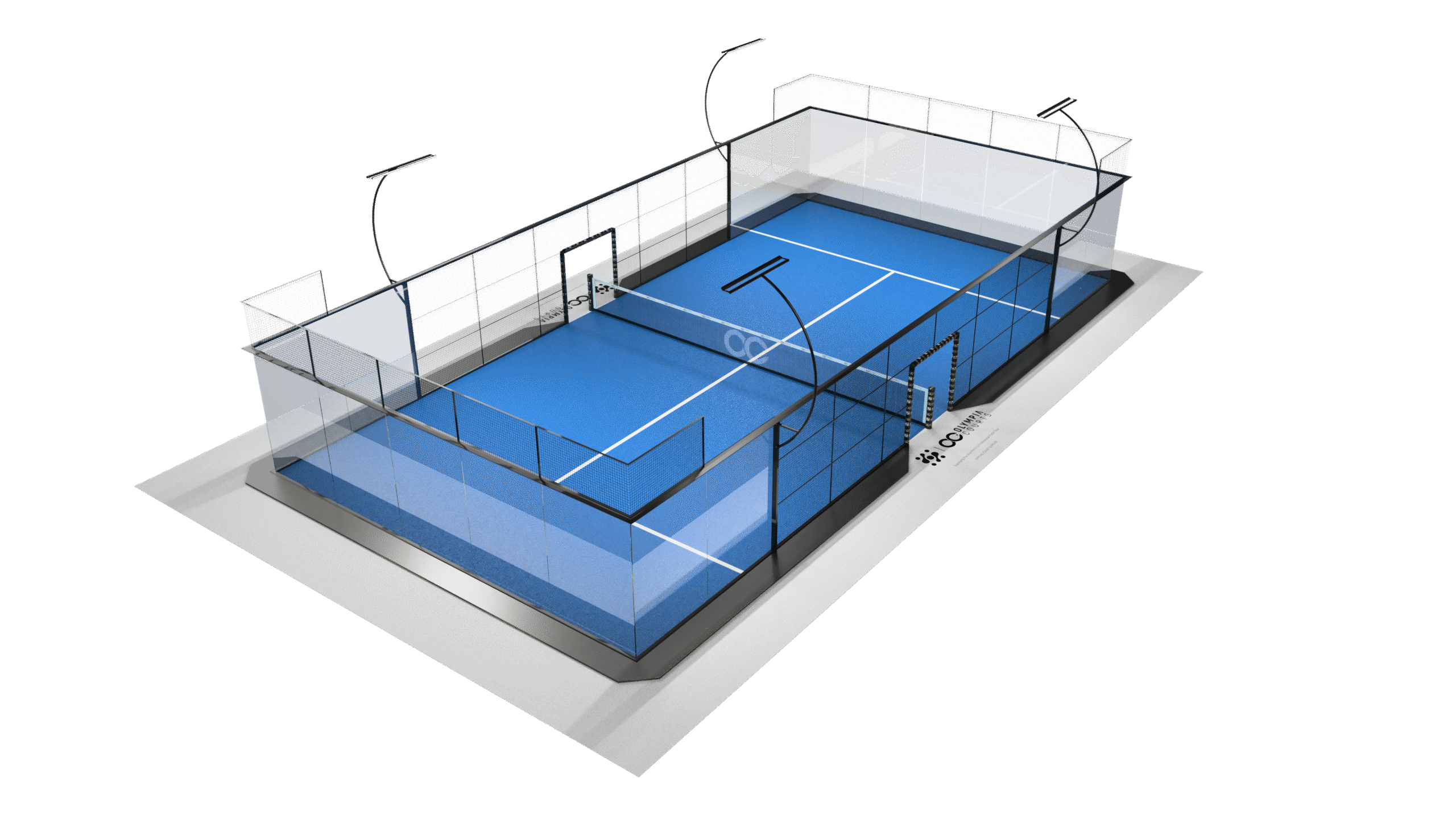
The OC AirPadel Platform is engineered with a high-strength galvanized steel framework and adjustable support legs, allowing it to accommodate ground slopes of up to one metre.
Its modular construction reduces the need for extensive ground works and allows the platform to be dismantled, transported, and reinstalled at another suitable location.
The system incorporates concrete base panels designed to provide a stable playing foundation with ball behaviour comparable to conventional cement-based installations.
With an installation time of approximately three to four days, depending on site conditions and project requirements, AirPadel offers an alternative for projects that require a more flexible approach to court infrastructure.
It is particularly suited to:
- Temporary sporting events and exhibitions.
- Rooftops and unconventional spaces.
- Hotels, resorts, and hospitality developments.
- Locations with uneven terrain.
- Projects where future relocation may be required.
M1000 Portable: Bringing Premium Padel to New Venues
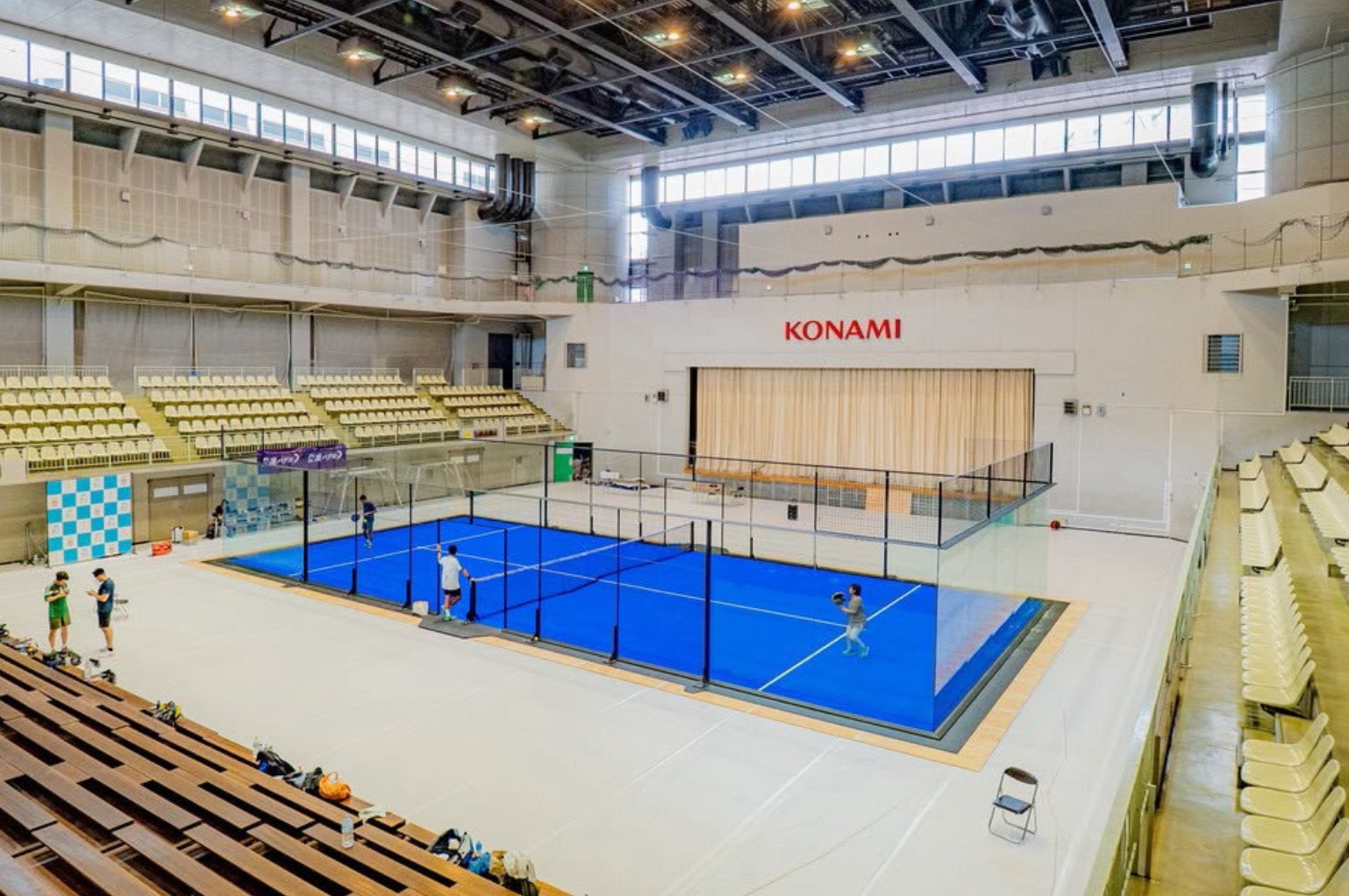
For projects where presentation and spectator experience are equally important, Olympia Courts also offers the M1000 Portable solution.
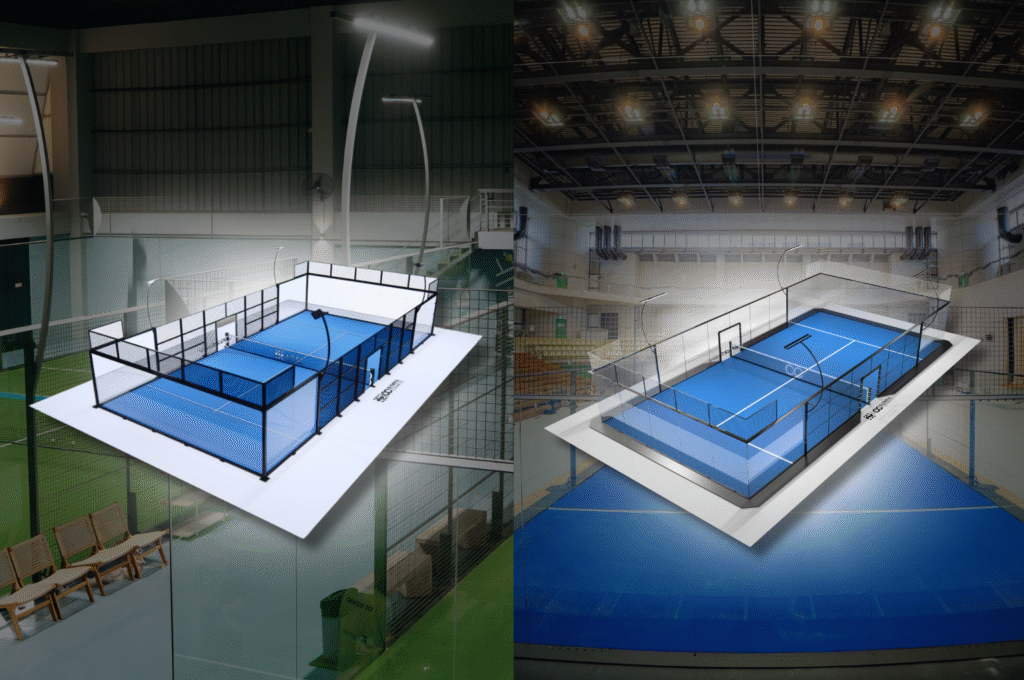
Combining the panoramic design of the M1000 with a portable installation approach, this solution allows premium padel experiences to be introduced into venues where a conventional permanent court may not be practical.
An example is the RIN Padel project in Japan, where Olympia Courts delivered an M1000 Portable installation to bring padel into an existing indoor sports venue.
This demonstrates how portable court solutions can extend beyond traditional padel clubs, opening opportunities for installations in arenas, exhibitions, special events, and other unconventional environments.
7. Important Factors to Consider Before Choosing
Before deciding between a permanent or portable installation, project owners should evaluate several important factors.
1. Project Duration
Is the court intended to operate at the same location for many years, or will it be used for a temporary event or a project with a defined operating period?
2. Site Conditions
Assess the available surface, ground stability, slope, drainage, accessibility, and environmental exposure. For rooftops and elevated locations, a qualified structural assessment is particularly important.
3. Construction Requirements
Consider whether the site can accommodate conventional foundations or whether a modular platform would be more suitable. Also evaluate the local building regulations, permits, and installation requirements.
4. Future Relocation
If the property is leased, the venue is temporary, or future redevelopment is possible, relocation may be an important factor in selecting the court system.
5. Total Project Investment
Compare the complete installation costs rather than looking only at the price of the court itself. Include foundations or platform systems, transportation, installation, electrical work, lighting, drainage, access, and any additional site preparation.
6. Intended Playing Experience
Regardless of the installation method, the quality of the court remains essential. Glass specifications, structural integrity, turf, lighting, and installation precision all contribute to player safety and playing consistency.
8. So, Which Padel Court Is Right for Your Project?
The decision ultimately comes down to your project’s objectives.
If you are developing a dedicated padel club, sports academy, resort facility, or long-term recreational destination, a permanent court may be the most practical solution.
If your project involves temporary venues, exhibitions, sporting events, leased properties, rooftops, or locations that require greater installation flexibility, a portable solution may offer significant advantages.
There is no universal answer. The best court is the one that aligns with your location, infrastructure, operational plans, and long-term investment goals.
At Olympia Courts, we work with clubs, resorts, developers, event organizers, and sports investors to deliver padel court solutions suited to different environments and project requirements.
Whether you are planning a permanent sports facility or looking to bring padel into an unconventional space, choosing the right engineering approach is the first step toward building a successful project.
Planning a padel project?
Contact Olympia Courts to discuss your requirements and discover the right court solution for your space.