
Is a Padel Court a Good Investment for Hotels and Resorts?
Hotels and resorts are constantly looking for ways to improve the guest experience, differentiate their properties, and create additional revenue opportunities. While swimming pools, spas, fitness centres, and restaurants remain important hospitality amenities, another facility is gaining attention: the padel court.
Padel combines elements of tennis and squash in a social, accessible racket sport that can appeal to beginners, recreational players, and experienced athletes. For hospitality businesses, it offers more than another activity on the property. It can become part of the guest experience, a reason to visit, and a potential source of additional income.
But is investing in a padel court actually worthwhile for a hotel or resort?
The answer depends on the property’s location, target market, available space, investment budget, and ability to operate the facility effectively. When planned strategically, a padel court can become a valuable addition to a hospitality development.
1. Why Padel Is an Opportunity for the Hospitality Industry
Modern travellers increasingly look for experiences that go beyond accommodation. Wellness activities, outdoor recreation, social experiences, and distinctive amenities can all influence how guests choose where to stay.
Padel brings these elements together in one facility.
Unlike amenities that may appeal to a relatively narrow audience, padel can serve couples, groups of friends, families, corporate travellers, and sports enthusiasts. Its doubles format also encourages social interaction, making it suitable for leisure-focused properties and destinations that want to create a more engaging guest experience.
For hotels and resorts, this creates an opportunity to integrate sport into the overall hospitality offering.
A well-positioned padel court can complement existing facilities, support recreational programming, and give guests another reason to spend time on the property.
However, the opportunity is not automatic. The sport’s popularity and commercial potential vary by market, so operators should assess local demand before committing to construction.
2. How a Padel Court Can Benefit a Hotel or Resort
A. Enhance the Guest Experience
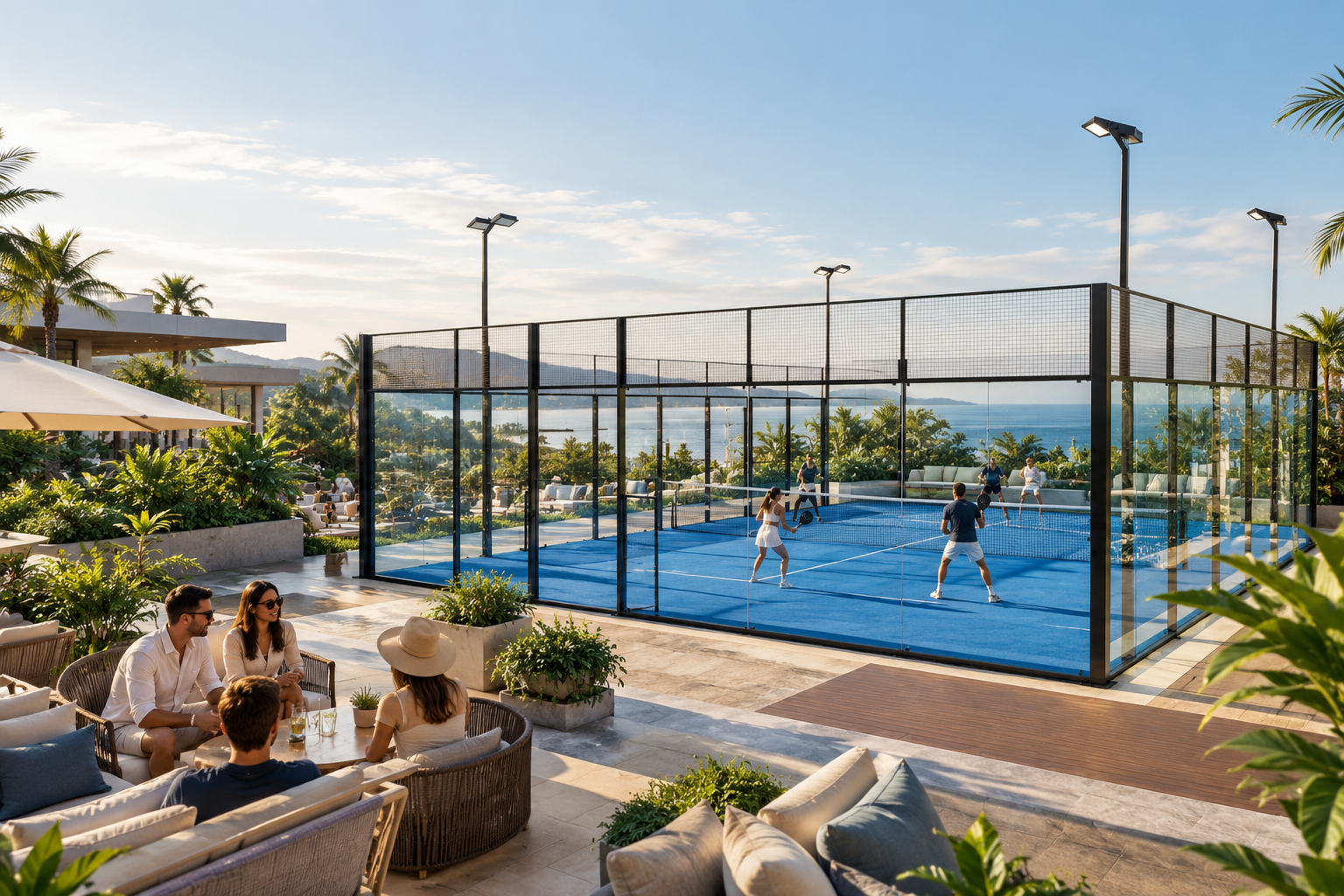
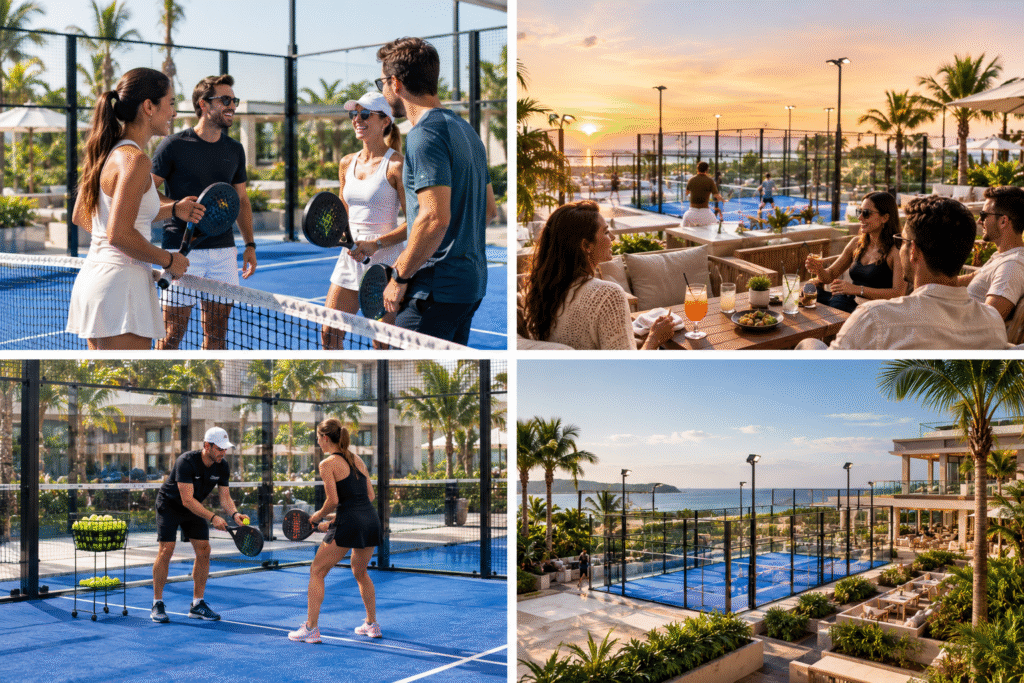
A padel court gives guests another way to stay active, socialise, and make the most of their stay.
For beach resorts, wellness retreats, luxury hotels, and lifestyle destinations, the court can complement existing recreational amenities and create a more complete leisure experience.
It can also support organised activities such as beginner sessions, friendly matches, private coaching, and group events.
The key is to integrate the court into the property’s overall guest experience rather than treating it as an isolated facility.
B. Create Additional Revenue Opportunities
Depending on the property’s business model, a padel court can generate revenue through several channels.
Court bookings: Hotels may offer paid sessions to outside visitors, local residents, or guests who want to reserve exclusive playing time.
Coaching and lessons: Partnerships with qualified coaches can create opportunities for private lessons, group classes, and introductory sessions.
Memberships and packages: Resorts with sufficient local demand may explore memberships or recurring access packages for nearby residents and returning guests.
Events and tournaments: Friendly competitions, corporate gatherings, and organised social events can bring additional visitors to the property.
Food and beverage sales: Players and spectators may purchase refreshments or meals before and after playing, creating opportunities for the hotel’s existing restaurant, café, or bar.
Not every property will benefit from every revenue stream. The right approach depends on the target audience, available staff, local demand, and the hotel’s operating model.
C. Differentiate the Property From Competitors
In a competitive hospitality market, distinctive amenities can help a property establish a stronger identity.
A professionally designed padel court can communicate an active, contemporary, and experience-focused approach to hospitality. It may be particularly relevant for resorts targeting younger travellers, active families, sports enthusiasts, and groups seeking shared experiences.
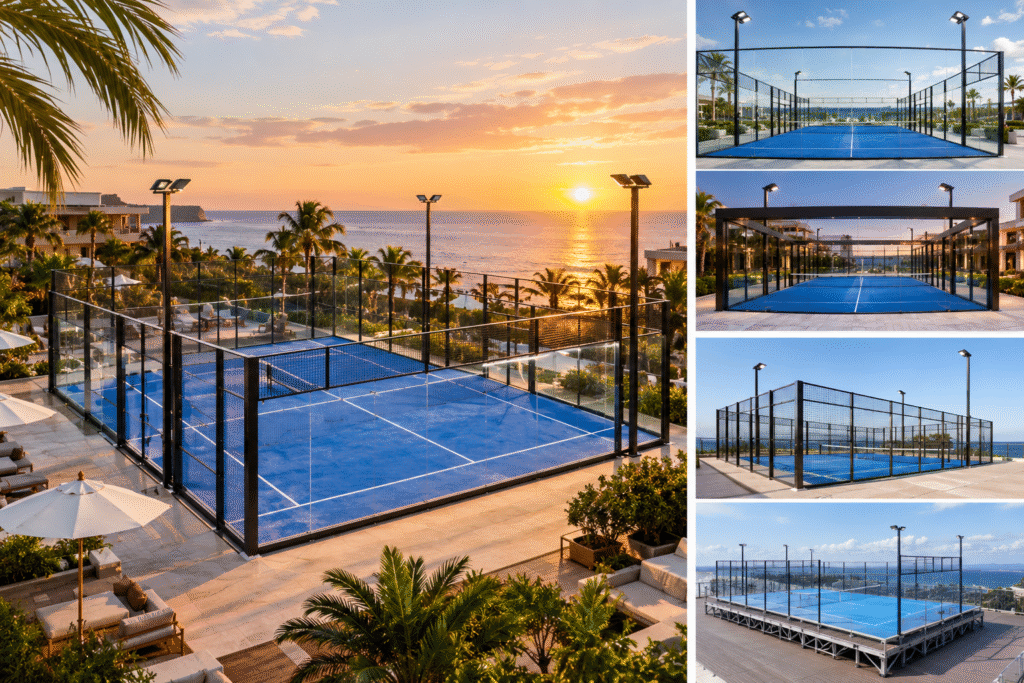
For premium properties, the court’s architectural design can also contribute to the overall appearance of the development.
Panoramic glass, clean structural lines, integrated lighting, and thoughtful landscaping can help the court complement the surrounding architecture rather than appear as an afterthought.
The greatest value comes when the facility supports the property’s positioning and appeals to the guests it wants to attract.
D. Expand the Property’s Use Beyond Overnight Guests
A hotel or resort does not necessarily have to rely exclusively on its in-house guests to use a padel court.
Where location, access, and operating arrangements allow, the facility can also serve nearby residents, local players, corporate groups, and visitors from surrounding communities.
This can help create demand outside traditional hotel occupancy patterns.
For example, a resort near a major residential area might offer evening court bookings to local players while reserving selected hours for hotel guests. A destination resort might instead focus on guest activities, coaching packages, and special events.
The operating strategy should protect the guest experience while making productive use of available court time.
3. What Is the Potential Return on Investment?
A padel court should be evaluated as a commercial asset, not simply as a recreational amenity.
Its financial performance depends on the initial project cost, booking demand, utilisation, pricing, operating expenses, and the wider value it contributes to the property.
Before making a decision, investors should consider two forms of value.
Direct financial returns come from court bookings, coaching, events, memberships, and other paid activities.
Indirect hospitality value may come from a stronger guest experience, increased use of existing facilities, improved differentiation, or additional bookings influenced by the amenity.
Indirect benefits are harder to measure and should not be assumed without evidence. Hotels should track guest feedback, facility usage, package performance, and booking patterns to understand whether the court contributes to their wider business objectives.
A Simple Revenue Example
Consider a hypothetical resort that charges €40 per hour for court bookings and achieves an average of four paid booking hours per day over 300 operating days.
The estimated annual gross court-booking revenue would be:
€40 × 4 hours × 300 days = €48,000 per year.
This is an illustrative scenario, not a forecast of actual resort performance. It excludes complimentary guest sessions, taxes, operating costs, maintenance, and the initial investment.
The example demonstrates why realistic utilisation assumptions matter. A court’s financial potential depends on the number of hours actually booked and paid for, not simply the number of hours it is available.
To assess profitability, hotel owners should model conservative, expected, and high-demand scenarios before proceeding.

4. What Costs Should Hotels and Resorts Consider?
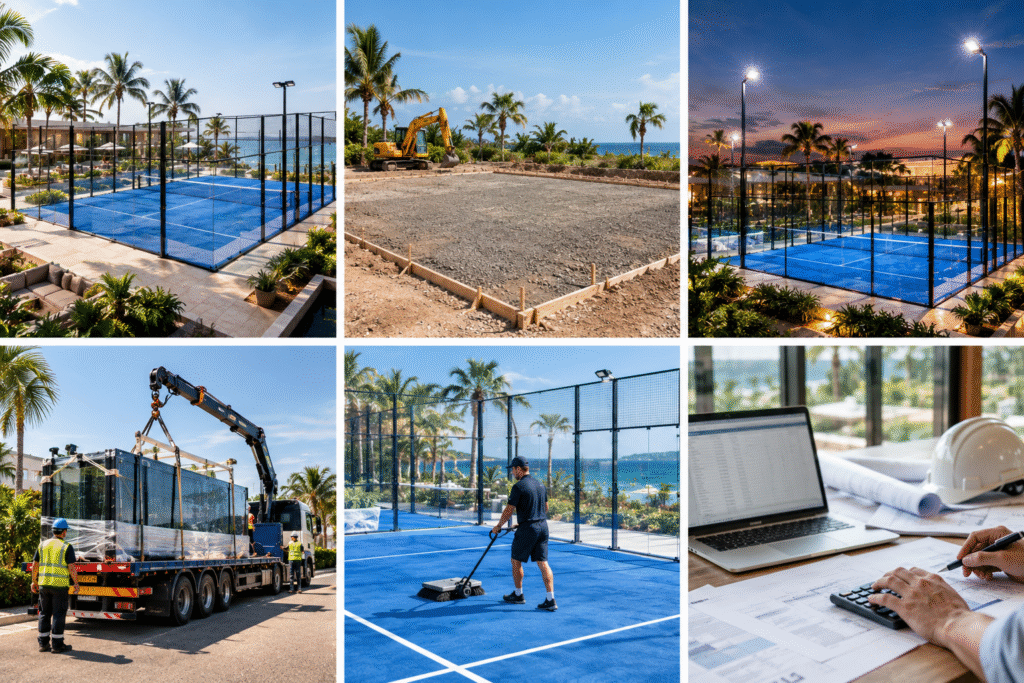
The cost of adding a padel court extends beyond purchasing the court itself. The final investment depends on the site, the selected model, the required infrastructure, and the property’s expectations for design and operation.
Key considerations include:
Court Structure and Equipment
The selected court model influences the project’s initial cost, visual appearance, structural design, and suitability for its intended use.
A resort seeking a distinctive show court may have different priorities from a property that wants a practical recreational amenity with an efficient investment profile.
Site Preparation and Foundations
Ground conditions, levelling, concrete works, drainage, access, and underground services can all affect the total project budget.
Rooftop or sloped-site installations may require additional engineering and site-specific solutions.
Lighting and Weather Protection
Lighting can support evening bookings and improve scheduling flexibility, subject to local requirements and the property’s operating policy.
Roofing or other weather-protection measures may improve usability in certain climates, but they introduce additional costs and engineering considerations.
Installation and Logistics
Transport, delivery, installation equipment, labour, technical supervision, and local approvals should be considered when comparing quotations.
A low equipment price does not necessarily mean a lower total project cost.
Ongoing Operations
Owners should budget for maintenance, cleaning, inspections, utilities, staffing, booking management, and eventual component replacement.
The most useful comparison is the total cost of delivering and operating the court over time, rather than the purchase price alone.
5. Choosing the Right Court for a Hospitality Project
Not every hotel or resort requires the same court design. The right solution depends on the project’s location, target market, available space, climate, and investment priorities.
At Olympia Courts, different court solutions serve different project requirements.
M25 Panoramic: A practical option to evaluate for hospitality developments seeking panoramic visibility and a balance between performance, durability, and investment efficiency.
M1000 Super Panoramic: Designed around a column-free panoramic view, making it worth considering for luxury resorts, showcase installations, and properties where visual impact is a priority.
OC Typhoon: A reinforced solution to consider for projects exposed to demanding wind and weather conditions, subject to site-specific engineering requirements.
AIRPADEL Platform: A modular platform solution that can be relevant for certain rooftops, uneven sites, temporary venues, and locations where conventional ground preparation presents challenges. Feasibility still depends on structural assessment, applicable approvals, and the requirements of the specific site.
Selecting the appropriate model requires more than comparing appearance. Investors should evaluate structural specifications, environmental exposure, maintenance requirements, installation conditions, and the intended use of the facility.
The objective is to choose a court that fits the property’s needs while supporting long-term operational performance.
6. Real-World Application: Bringing Padel Into a Resort Environment
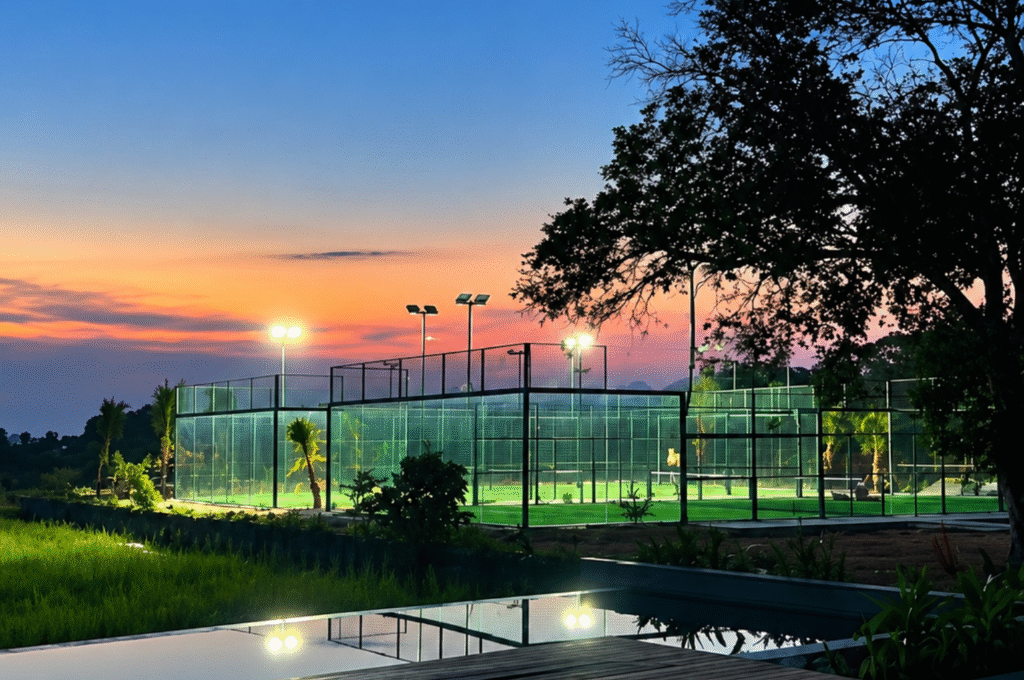
Olympia Courts’ Padel Langkawi project in Malaysia demonstrates how a court can be incorporated into a resort setting.
Set within a scenic rainforest environment, the project introduced padel as a recreational and lifestyle offering, with professional coaching, guest activities, and access for visitors beyond the resort’s overnight guests.
This type of approach illustrates how a court can become part of a wider destination experience rather than functioning solely as a standalone sports facility.
For resort operators, the important lesson is to plan the court alongside the property’s guest experience, audience, and operating strategy.
A successful project starts by understanding who will use the court, how it will be accessed, and how it will complement the rest of the development.

7. How to Determine Whether a Padel Court Is Right for Your Property
Before investing, hotel owners and resort developers should assess the project from both a commercial and operational perspective.
Evaluate local demand. Research nearby clubs, existing sports facilities, customer interest, competing activities, and potential partnerships with coaches or local operators.
Identify the target audience. Determine whether the court will primarily serve in-house guests, local residents, corporate groups, sports tourists, or a combination of these audiences.
Assess the available space. Review the proposed location, access, foundations, drainage, lighting, noise considerations, and any relevant planning or structural requirements.
Build a realistic financial model. Estimate court bookings, operating hours, pricing, staffing, maintenance, capital expenditure, and other potential income streams. Include a conservative scenario.
Plan the operating model. Decide whether the hotel will manage the facility internally, work with an external operator, or partner with qualified coaches and sports organisations.
Define how success will be measured. Track court utilisation, revenue, maintenance costs, guest participation, customer feedback, and the performance of related packages or events.
These steps help establish whether padel is a good fit for the property and what would be required to make the investment work.
Conclusion: Is a Padel Court a Good Investment for Hotels and Resorts?
A padel court can be a worthwhile investment for hotels and resorts when it aligns with the property’s audience, location, financial objectives, and long-term hospitality strategy.
It can enhance the guest experience, introduce additional revenue opportunities, create new reasons for visitors to engage with the property, and strengthen a resort’s recreational offering.
However, the return depends on more than the popularity of the sport. Site suitability, construction quality, realistic demand forecasts, operating costs, and effective management all play important roles.
The strongest projects begin with a clear commercial objective and a court solution designed around the property’s real requirements.
At Olympia Courts, we work with hotels, resorts, investors, and property developers to evaluate court solutions and plan projects around their intended use, site conditions, and long-term goals.
Planning to introduce padel to your hotel or resort?
Contact Olympia Courts to discuss your project, explore suitable court models, and determine the right approach for your property.