
Budget, Hidden Costs and the Decisions That Determine Your Return on Investment
The first question most investors, club operators, hotels and property developers ask is simple: how much does it cost to build a padel court?
The honest answer is that the court structure is only one part of the total investment. The final budget depends on the selected court model, site conditions, civil works, freight, installation, lighting, climate requirements and the standard of finish expected from the project.
A low initial quotation can therefore be misleading. Two courts that look similar on paper may have very different structural strength, corrosion protection, glass quality, installation requirements and long-term maintenance costs.
For investors in Asia-Pacific, the right question is not simply:
“What is the cheapest court available?”
It is:
“What is the total cost of delivering a safe, durable and commercially successful padel court at my location?
What Does a Padel Court Project Really Cost?
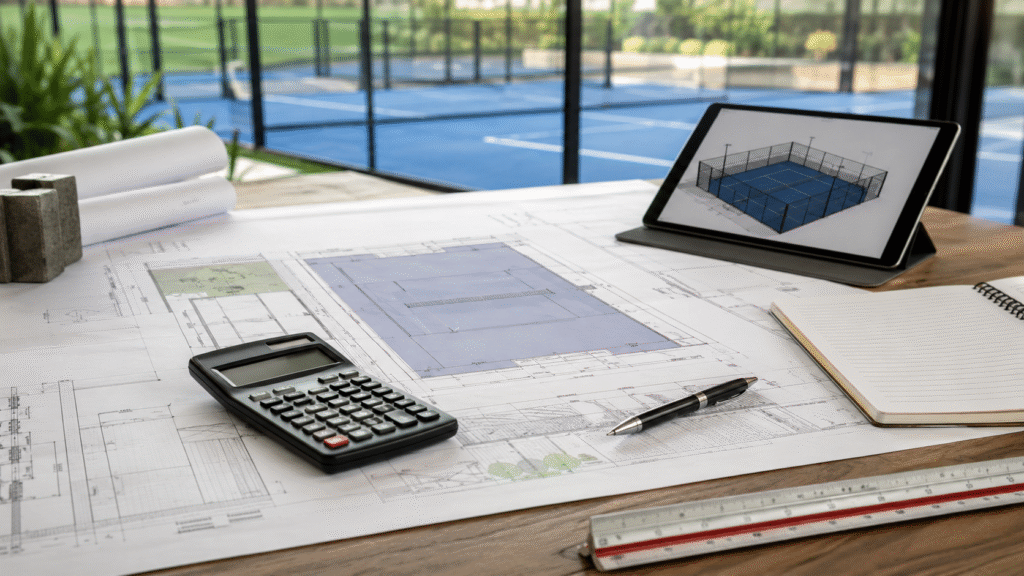
There is no single universal price for building a padel court. A quotation may cover only the steel structure, glass, turf and lighting, while excluding foundations, drainage, freight, customs duties, electrical works, installation equipment and local approvals.
This is why buyers should distinguish between the price of the court equipment and the total delivered project cost.
A complete budget should normally be divided into five main areas:
- Court structure and equipment
- Site preparation and civil works
- Freight, duties and local logistics
- Installation and technical supervision
- Additional infrastructure and operational requirements
Only after separating these costs can different suppliers and proposals be compared properly.
As a general indication, the court equipment itself may represent only part of the total investment. A straightforward installation on a prepared site will cost significantly less than a rooftop, coastal, covered or remote-location project requiring reinforced engineering and extensive civil works.
The Main Factors That Determine the Final Budget
1. Court Model and Structural Design
A standard panoramic court will generally require a lower investment than a reinforced extreme-weather court or a flagship super-panoramic model.
The correct option depends on the commercial purpose of the venue.
A multi-court club focused on efficient expansion may prioritise durability, installation speed and total cost of ownership. A luxury resort, professional tournament venue or high-visibility real-estate development may place greater value on uninterrupted sightlines, architectural integration and sponsor visibility.
Olympia Courts offers different solutions for different types of projects, including panoramic commercial courts, super-panoramic showcase courts, reinforced systems for demanding climates and modular platforms for locations where conventional foundations are difficult.
The most important question is not whether the court is described as standard or premium. It is whether the structural specification matches the site, expected usage and long-term business model.
2. Groundworks, Foundations and Drainage
The court cannot compensate for a poorly prepared base.
An uneven or incorrectly designed slab can affect:
- Ball bounce
- Glass alignment
- Turf performance
- Water drainage
- Structural stability
- Installation accuracy
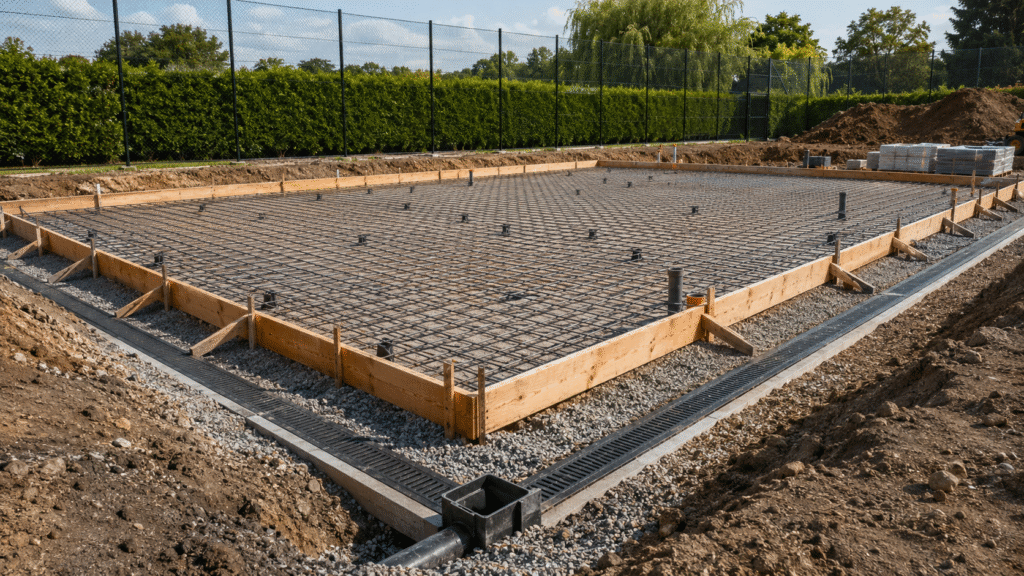
For outdoor courts, drainage is particularly important. Heavy rainfall combined with an unsuitable base can cause standing water, premature turf deterioration and lost operating hours.
Groundworks may include excavation, reinforced concrete, levelling, drainage channels, access routes and electrical conduits. These costs are normally influenced more by the condition of the site than by the court itself.
Before ordering the courts, investors should complete a site assessment and confirm:
- Available dimensions
- Ground-level differences
- Soil or slab condition
- Drainage capacity
- Vehicle and crane access
- Underground services
- Local structural requirements
A technically correct court installed on an unsuitable foundation will still produce a poor final result.
3. Freight, Customs and Last-Mile Delivery
Asia-Pacific is not a single logistics market.
Shipping a court to Singapore, Indonesia, Japan, Australia, India or a remote island resort involves very different port charges, customs procedures, inland transport requirements and site-access conditions.
The logistics budget may include:
- International freight
- Marine insurance
- Port handling
- Customs duties and taxes
- Customs brokerage
- Container storage
- Transport from the port to the site
- Crane or forklift rental
- Manual handling for restricted-access locations
Remote sites, rooftops, islands and dense urban developments require additional planning. A project may have an attractive factory price but become expensive if access is difficult or if packaging, unloading and local transport have not been properly considered.
The complete delivery route should therefore be reviewed before production begins, not after the container arrives.
4. Installation and Technical Supervision
Correct installation is not simply a matter of assembling steel components.
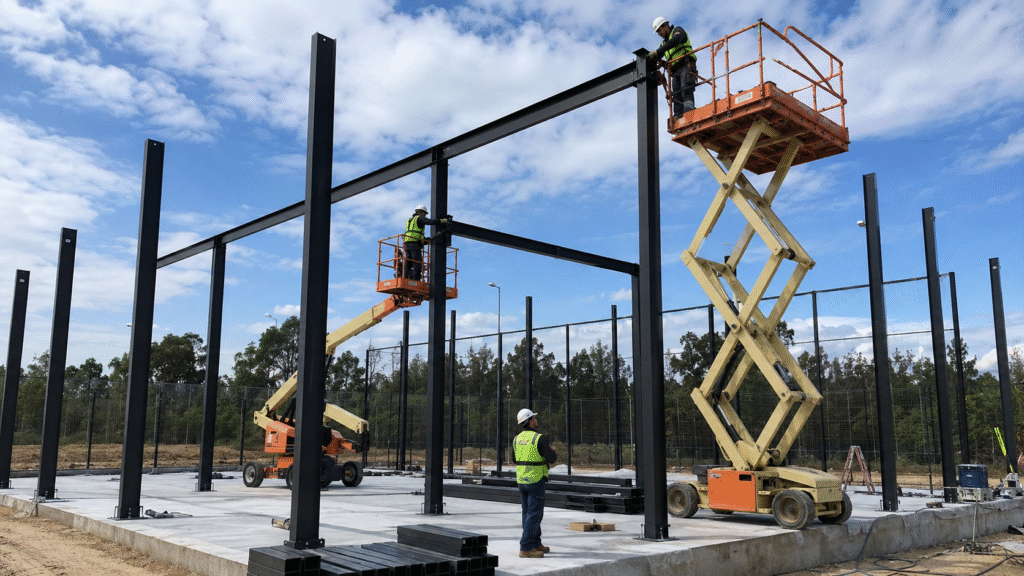
A professional installation requires accurate positioning, anchoring, glass handling, turf preparation, net tensioning, sand distribution and lighting alignment. Mistakes at this stage can compromise the playing experience and shorten the useful life of the court.
The installation budget may vary depending on:
- Number of courts
- Local labour costs
- Travel and accommodation
- Equipment rental
- Site access
- Installation sequence
- Weather conditions
- Availability of experienced local teams
For larger projects, combining a trained local crew with specialist technical supervision can reduce costs without sacrificing quality.
The installation plan should clearly define who is responsible for labour, lifting equipment, electrical connections, accommodation, tools, consumables and final quality control.
5. Glass, Turf and Lighting Specifications
Three components have a major effect on both playing quality and long-term value: glass, turf and lighting.
Tempered Glass
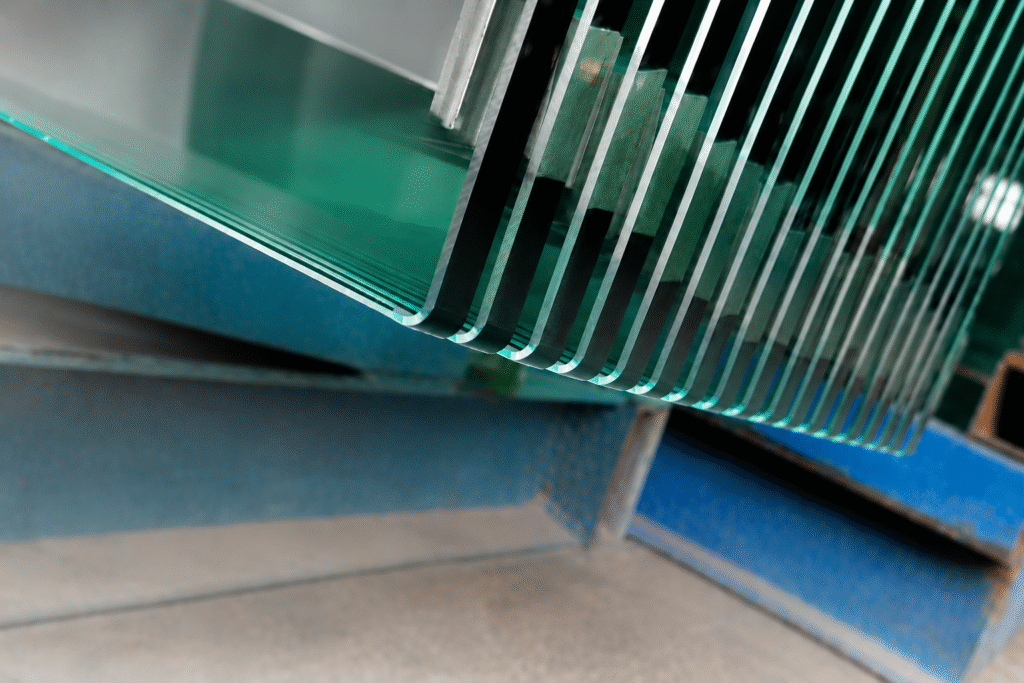
Professional padel courts normally use 12 mm tempered safety glass. The quality of the glass, drilling, edge finishing and installation affects player safety, rebound consistency and visual clarity.
Low-quality glass may create greater risk of distortion, cracking, incorrect fragmentation or installation problems. Buyers should verify the applicable standards and technical documentation rather than relying only on the stated thickness.
Artificial Turf
Turf should be selected according to the desired playing speed, local climate and expected level of use.
A heavily used commercial club has different requirements from a private residential court. Low-cost turf may require earlier replacement, suffer faster fibre deterioration or create inconsistent playing conditions.
The turf system should be selected based on fibre quality, density, backing, UV resistance, sand requirements and suitability for the local environment.
Lighting
Lighting is part of the revenue model, not merely an accessory.
Poor illumination affects the playing experience, creates glare and makes the ball difficult to track. It can also reduce evening bookings, which are often the most valuable operating hours for a commercial club.
A professional lighting system should provide uniform coverage, minimise shadows and match the operational level of the venue. Clubs planning tournaments, streaming or premium evening sessions will require a higher specification than a private or recreational court.
The Hidden Costs Buyers Frequently Underestimate
Electrical Infrastructure
The lighting system still requires a suitable electrical connection, distribution board, cabling, protection systems and local certification.
These works are not always included in the court quotation and should be assessed early in the planning process.
Permits and Professional Reports
Depending on the country and the type of site, a project may require:
- Planning consent
- Building approval
- Structural calculations
- Noise assessments
- Lighting approval
- Fire-safety review
- Landlord authorisation
- Local engineering certification
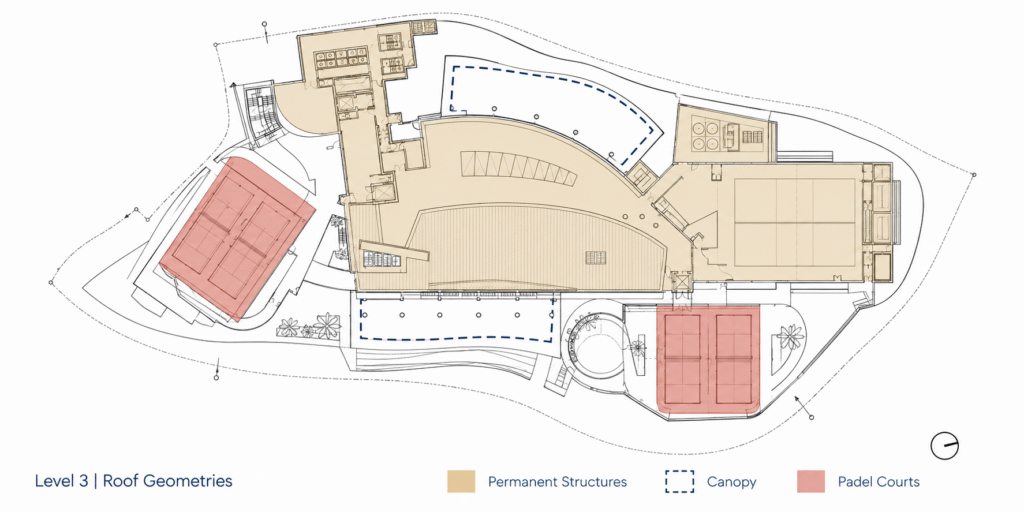
The requirements for a ground-level outdoor court are very different from those for a rooftop installation or a covered facility.
Roofs and Weather Protection
A roof can significantly improve court utilisation by protecting players from rain and direct sunlight. However, it is a separate structural project with its own engineering, drainage and approval requirements.
In tropical markets, weather protection may increase the number of playable hours and improve customer comfort. Its commercial benefit must therefore be compared with the additional capital cost.
Club Infrastructure
A padel court is not automatically a padel club.
Commercial projects may also require:
- Reception and booking systems
- Changing rooms and toilets
- Parking
- Seating and social areas
- Food and beverage facilities
- Storage
- Signage
- Security systems
- Acoustic treatment
- Landscaping
These elements may represent a significant part of the total investment, especially for premium clubs, resorts and hospitality developments.
Maintenance and Replacement Planning
The initial budget should include a long-term maintenance plan covering:
- Turf brushing and sand redistribution
- Glass inspection and cleaning
- Lighting maintenance
- Paint and coating inspections
- Fasteners and anchoring points
- Net systems
- Eventual component replacement
How Tropical and Coastal Conditions Affect the Investment
Humidity, salt air, intense UV exposure, heavy rain and high winds can accelerate deterioration when the court is not designed for the environment.
In tropical and coastal locations, corrosion protection should be treated as a structural requirement rather than an optional upgrade.
The quality of galvanisation, powder coating, fasteners, welding, drainage and material preparation directly affects how the court performs over time.
A low-cost structure designed for a mild inland climate may not be suitable for an exposed resort, rooftop, island or coastal development.
For severe environments, Olympia Courts offers the OC Typhoon, a reinforced solution engineered for demanding wind and weather conditions.
This does not mean every project requires an extreme-weather court. It means that the structural solution should be selected according to the real conditions of the site rather than a generic catalogue specification.
Indoor, Outdoor or Platform Court?
Outdoor Courts
Outdoor courts normally avoid the cost of constructing a complete building, but they require proper drainage, UV-resistant materials and structural engineering suited to local wind and weather conditions.
They are often the most cost-efficient option where the climate, location and expected operating hours support outdoor play.
Covered or Indoor Courts
Covered courts provide more predictable operation and may increase playable hours during rain, extreme heat or difficult weather.
However, investors must also account for the roof or building, ventilation, clear height, lighting, drainage and fire-safety requirements. In many projects, the covered structure can cost substantially more than the courts themselves.
Platform Courts
A platform can be valuable when conventional foundations are difficult, slow or undesirable.
The OC AirPadel Platform uses a modular structure that can adapt to uneven surfaces and reduce the need for permanent civil works. It is also relocatable, making it relevant for rooftops, leased land, public spaces, events and sites that may be redeveloped in the future.
The platform increases the equipment cost, but it may reduce excavation, permanent construction, delays and restoration risk.
The correct decision should therefore be based on the total project cost and long-term flexibility, not only on the price of the platform.
How to Estimate the Return on Investment
There is no universal payback period for a padel court.
Revenue depends on the city, rental price, operating hours, occupancy, competition, coaching activity and additional services.
A simple starting formula is:
Annual court revenue = average hourly price × paid hours per day × operating days
For example, a court charging USD 40 per hour and achieving five paid hours per day for 350 days would generate:
USD 40 × 5 × 350 = USD 70,000 in annual gross booking revenue
This is gross revenue, not profit.
Operating expenses still need to be deducted, including:
- Rent or land cost
- Staff
- Electricity
- Booking platform fees
- Maintenance
- Marketing
- Insurance
- Taxes
- Administration
A credible financial model should test at least three different scenarios.
Conservative Scenario
- Slow player adoption
- Lower off-peak occupancy
- Strong seasonality
- Limited coaching revenue
- Higher initial marketing costs
Base Scenario
- Gradual community growth
- Stable evening and weekend demand
- Coaching and social events
- Moderate membership income
- Improving occupancy over time
High-Performance Scenario
- Strong location
- High utilisation
- Multiple revenue streams
- Tournaments and academies
- Sponsorship and corporate events
- Effective community management
The most common mistake is building the business plan around full peak-hour occupancy. The financial model should consider the entire operating week, including off-peak periods.
Which Olympia Courts Solution Fits Your Project?
M25 Panoramic
Suitable for commercial clubs and multi-court developments seeking professional performance, durability and an efficient investment point.
M1000 Super Panoramic
Designed for flagship clubs, premium resorts, show courts, events and venues where visibility, branding and spectator experience are central to the project.
OC Typhoon
Recommended for exposed coastal, tropical, rooftop and high-wind locations where structural resilience and long-term protection are priorities.
OC AirPadel Platform
Designed for rooftops, leased sites, uneven surfaces, temporary developments and projects that require fast installation with reduced permanent civil works.
The model should be selected only after reviewing the site, commercial concept, climate, expected usage and long-term plans.from far away. But they are exactly the details that define whether a court is standard or premium.
The Cheapest Quotation Is Rarely the Lowest-Cost Project
A padel court is a long-term commercial asset.
Its value depends on safety, structural stability, playability, appearance and operational reliability.
The lowest initial price may become the most expensive option when it results in:
- Additional civil works
- Shipping problems
- Installation delays
- Corrosion
- Glass or alignment issues
- Poor drainage
- Early turf replacement
- Lost playing hours
- Corrective maintenance
A professional supplier should help the buyer understand the complete project, not simply sell the steel, glass and turf.
The best investment is not necessarily the cheapest court. It is the solution that delivers the right balance between initial cost, durability, operating performance and long-term return.
Planning a Padel Project in Asia-Pacific?
Olympia Courts supports clubs, investors, hotels, resorts, sports facilities and property developers with court selection, feasibility planning, design, manufacturing, logistics and installation support.
Send us your project location, estimated number of courts and available site information. Our team will prepare a tailored recommendation based on the real requirements of your project.